
More about us
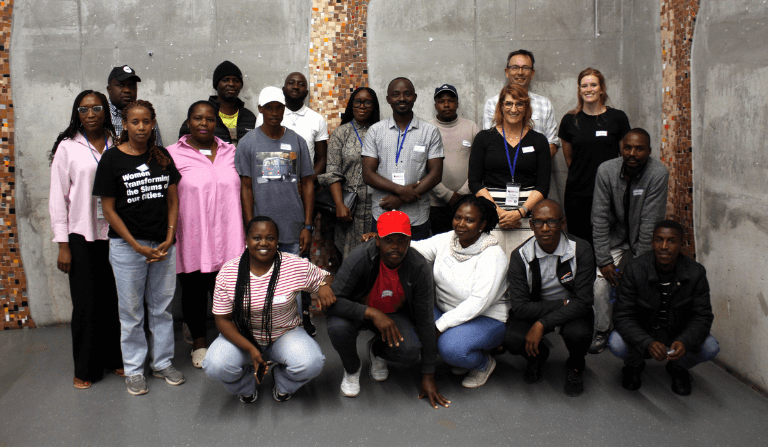
Heatwaves are becoming more frequent and intense due to climate change, significantly impacting health and livelihoods. In sub-Saharan Africa, manual labourers and informal settlement residents—who make up over half the population—face the highest risk due to their work and living conditions. However, heat adaptation strategies remain under-researched in real-world settings across the continent.
HABVIA was established to bridge this gap by conducting robust, community-based evaluations of heat adaptation interventions. By gathering high-quality cohort data on physiological and mental health, alongside climate, environmental, and socio-economic factors, we aim to inform evidence-based solutions that are both effective and accessible.
Our approach
- Community Co-Creation: We work with local residents to develop and implement heat adaptation measures that meet their specific needs.
- Scientific Excellence: We use objective measures to assess the health and social impacts of different adaptation strategies.
- Capacity Building: We support the next generation of African climate and public health researchers.
- Policy and Practice Impact: We contribute to global discussions on heat adaptation through research synthesis and engagement with policymakers and practitioners.
HABVIA is a multi-institutional effort, partnering with local and international organisations to ensure that our findings drive real change.

Our research Focus
HABVIA seeks to understand how different heat adaptation interventions can improve health outcomes. HABVIA is conducting research in four heat-stressed communities: Ga-Mashie (Accra, Ghana), a coastal fishing community; Nkwantakese (Kumasi, Ghana), a rural village outside Kumasi; Site B (Khayelitsha, South Africa), a mixed formal-informal township in Cape Town; Mphego Village (Limpopo, South Africa), a rural community near Thohoyandou.
Our key research objectives include:
- Co-developing and implementing affordable, scalable heat adaptations in collaboration with communities.
- Assessing the physiological, psychological, socio-economic, and environmental impacts of these adaptations.
- Testing heat warning systems to ensure they are tailored to the needs of vulnerable populations.
- Strengthening African research capacity in climate and public health.
By evaluating both physical (e.g., cooling interventions) and behavioural (e.g., awareness campaigns) adaptations, we aim to develop actionable strategies that can be replicated across the region.